
Number Eight!
Mineral Matters #165

Ok. Enough of the gold!
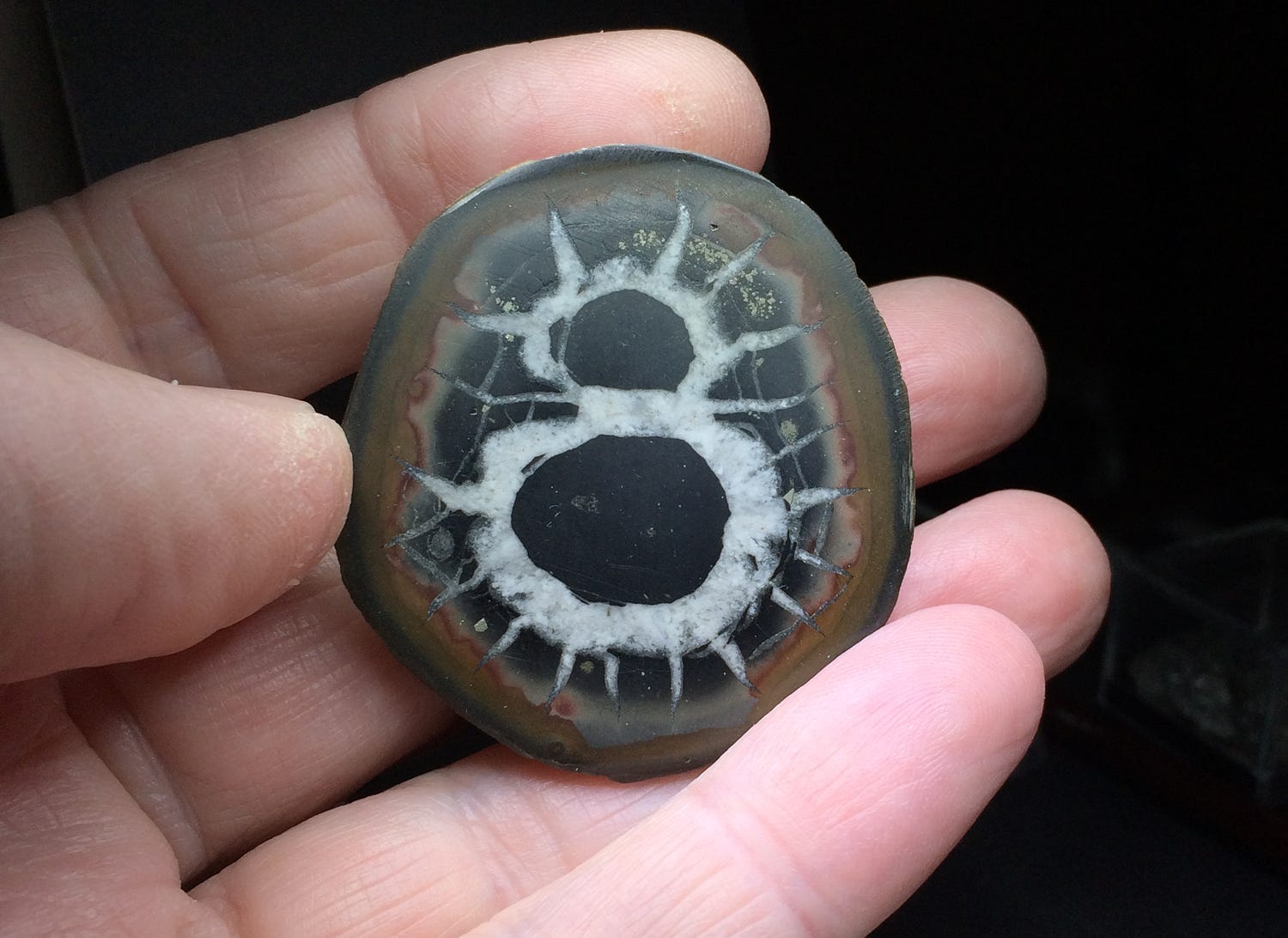
Today’s entry into the Facebook Mineral of the Week Group’s selected theme of Minerals that Look Like Something Else, is a septarian nodule from Madagascar.
So technically, this is a rock, but the white “fossilised centipede” is likely calcite, so also a mineral!
But what is a septarian nodule you might ask?
Septarian nodules are sedimentary concretions that formed a long long time ago in mud-rich marine environments. The process begins with the accumulation of sediment around a nucleus, often a fossilized shell or some other organic material.
The nodules form within layers of the sedimentary strata that have already been deposited. They usually form early in the burial history of the sediment, before the rest of the sediment is hardened into rock, giving the nodule time to form.
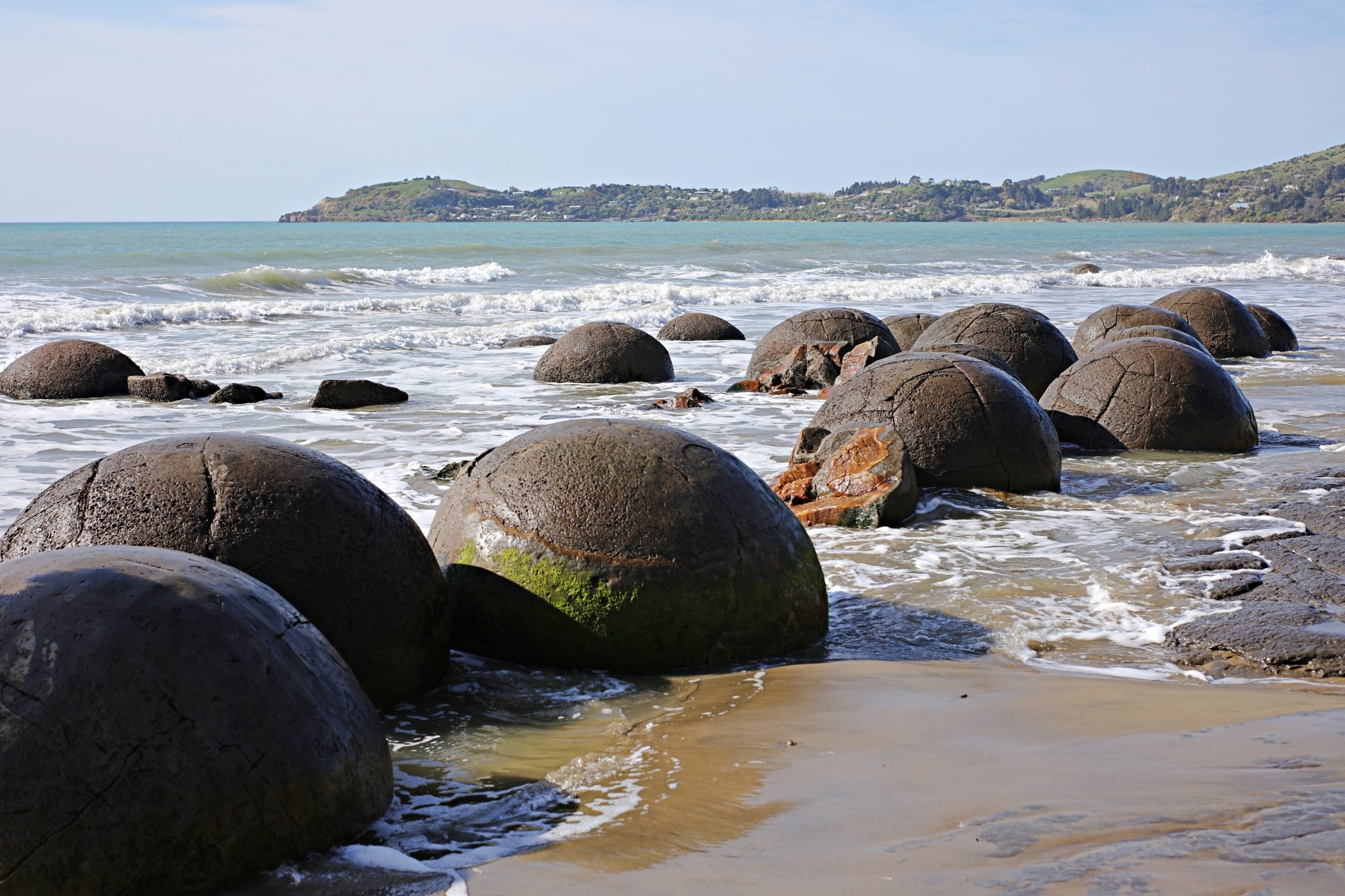
Mineralising solutions fill subsequent cracks, depositing minerals such as calcite, aragonite or barite. The cracks can often form a radiating pattern, and taper outward toward the rim of the concretion. The concretionary cement often makes the nodule harder and more resistant to weathering than the host stratum. An excellent example of this is the Moeraki Marbles in New Zealand (see second photo).
Any time “Number 8” comes up in our family, our thoughts go straight to a particular Simpsons episode. If you don’t know what it is, watch this short YouTube clip. 😁
Below: Number 8…
Below: Moeraki boulders up to 2 metres across.
Cool Steve.
I was driving a country hiway in NM, there was a round rock in a hillside I saw. I stopped. It was a several hundred pounds septarian nodule, along with a few smaller ones. I left the big ones took only one.